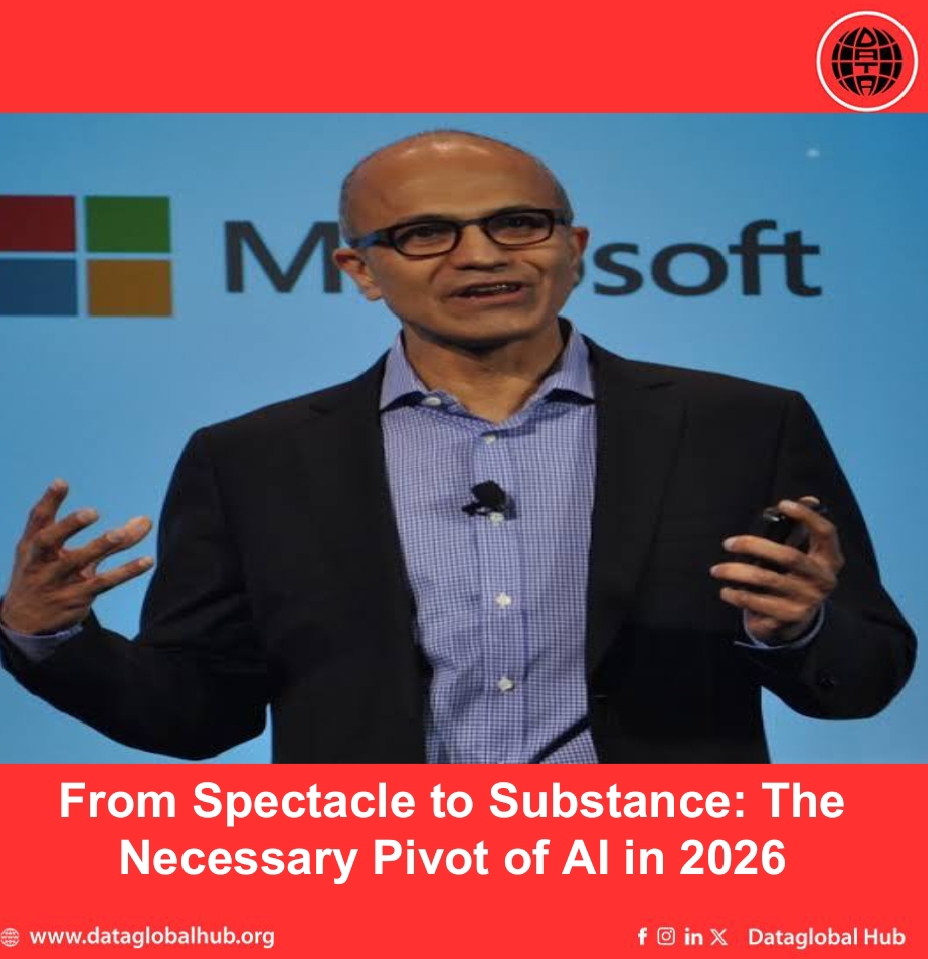
From Spectacle to Substance: The Necessary Pivot of AI in 2026
Translate this article
Recent commentary from Microsoft Chairman and CEO Satya Nadella, outlining a 2026 outlook for artificial intelligence, marks a notable pivot in the industry’s discourse. The emphasis is moving decisively from technological spectacle to practical substance, framing the coming year as a critical transition toward utility and integration.
The central thesis identifies a “model overhang,” a state where the raw capabilities of AI models have surged ahead of our current ability to deploy them for consistent, real-world impact. This recognition signals an industry entering a phase of widespread diffusion, where the measure of success is no longer a benchmark score but a proven result. The focus, as stated, is shifting from what the software can demonstrate to how it does perform within complex human and organizational systems.
This leads to several key imperatives highlighted in the outlook:
In essence, this outlook frames 2026 as a year of consolidation and application. It suggests the most valuable industry players will be the architects who build useful, trustworthy systems capable of navigating real-world complexity—like corporate bureaucracies—rather than those solely chasing the next technical frontier. It is a call for the industry to focus on how systems finish tasks, ensuring that the smartest model is not rendered useless by an inability to integrate into the human environments where work actually gets done.
The path forward, as outlined, is a deliberate turn from obsession with potential to a focus on utility, integration, and measured, responsible impact.
About the Author

Mia Cruz
Mia Cruz is an AI news correspondent from United States of America.
Recent Articles
Subscribe to Newsletter
Enter your email address to register to our newsletter subscription!