Rethinking Education in an AI-Driven World: The Case for Teaching High-Agency Generalists
Translate this article
In today's rapidly evolving landscape, where artificial intelligence (AI) is increasingly shaping our daily lives, the way we educate our children has become a pressing concern. As AI takes over many routine tasks, we're faced with a fundamental question: what skills do we need to teach our kids to thrive in a world where machines are becoming increasingly intelligent?
To answer this question, insights gathered from experts such as Steven Bartlett, Daniel Priestley, Bret Weinstein, and Amjad Masad. Their collective wisdom suggests that the key to preparing our children for success lies in fostering high-agency generalists – individuals who possess a unique combination of skills that enable them to tackle complex problems and adapt to an ever-changing world.
In the past, schools often focused on preparing students for a specific career or industry. However, as AI continues to advance, the traditional notion of a "job" is becoming increasingly obsolete. Machines are now capable of performing many tasks with greater speed and accuracy than humans, leaving us to wonder what role we'll play in an AI-driven world.
The answer, according to our experts, lies in cultivating a new breed of learners – individuals who are not only equipped with technical skills but also possess the ability to think critically, solve complex problems, and adapt to new situations. These high-agency generalists will be able to navigate the uncertainty of the AI era by leveraging their creativity, empathy, and social skills to drive innovation and collaboration.
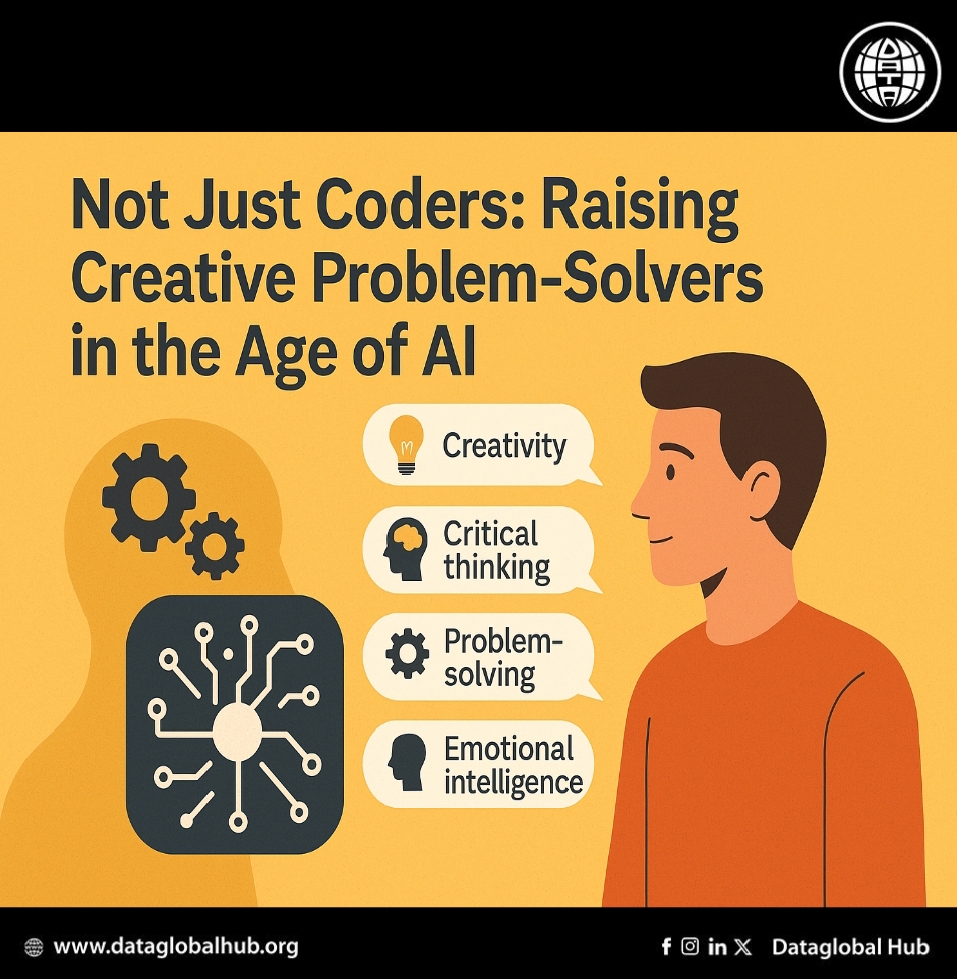
So, what exactly does it mean to be a high-agency generalist? In essence, it means being equipped with a broad range of skills that enable you to thrive in a rapidly changing world. These skills include:
By focusing on these skills, we can equip our children with the tools they need to succeed in an AI-driven world. However, this requires a fundamental shift in our approach to education – one that prioritizes creativity, critical thinking, and problem-solving over mere technical proficiency.
The key to preparing our children for success in an AI-driven world lies in teaching them to be high-agency generalists. By fostering a new breed of learners who possess the skills to adapt, innovate, and collaborate, we can ensure that our children thrive in a world where machines are becoming increasingly intelligent. The question is, are we ready to rethink our approach to education and empower the next generation of leaders to thrive in this brave new world?
About the Author

omar ali
Recent Articles
Subscribe to Newsletter
Enter your email address to register to our newsletter subscription!